Viewing Master Schedule
Theme: Configure
Who Is It For? System Administrator, Automation Engineer
What Is It?
Studio Canvas renders on-demand diagrams showing job nodes and job dependency relationships. Access these visualizations from the Studio page by selecting a schedule and selecting View.
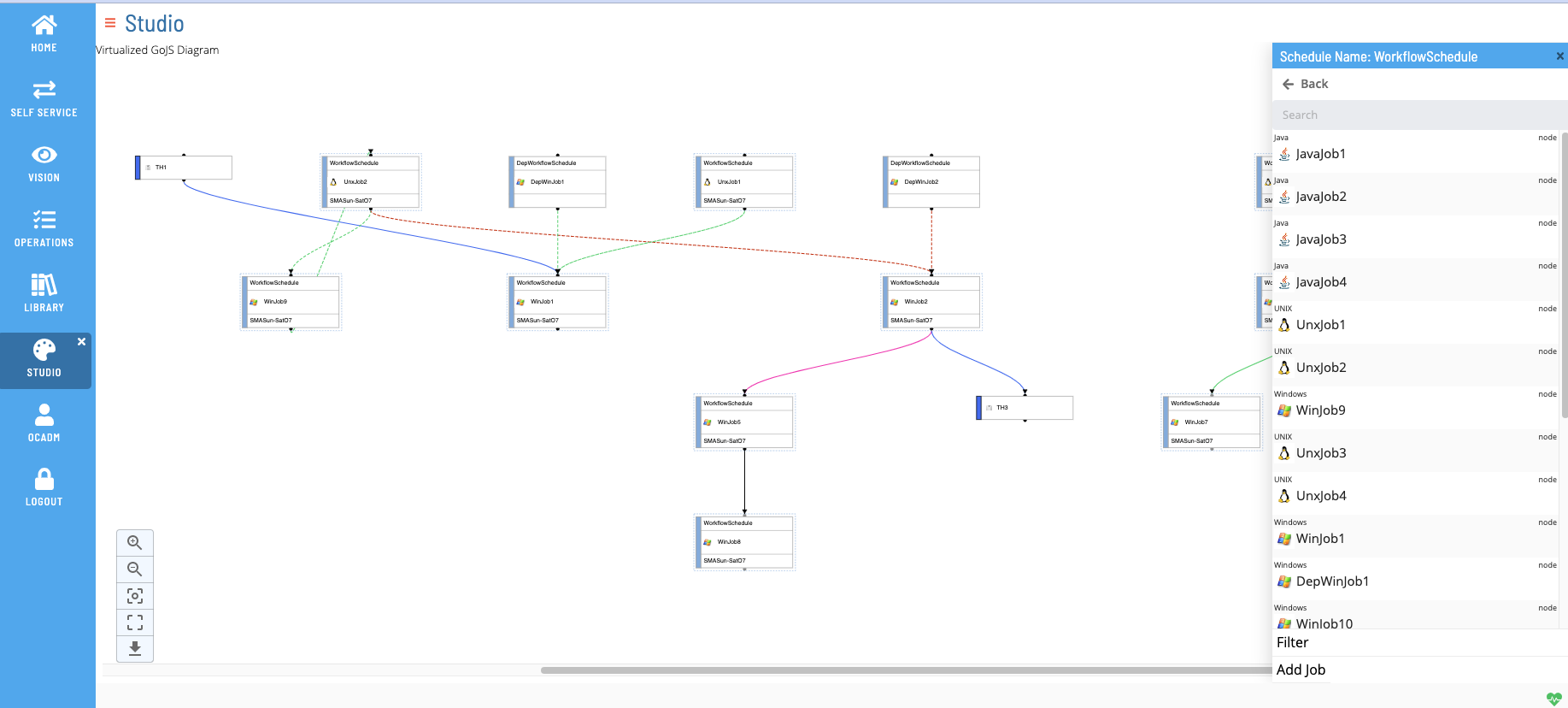
Studio Concepts
Nodes
Nodes represent job, threshold, resource, or expression entities. The color on the left side of the node indicates the node type:
- Light Blue: Job Node
- Dark/Royal Blue: Threshold Node
- Yellow: Resource Node
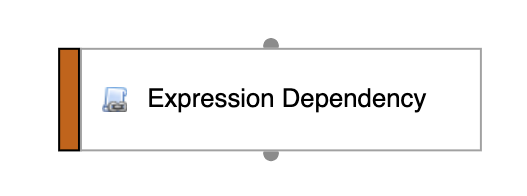
- Orange: Expression Node
Hovering over a node highlights it with a solid yellow border. Selecting a node highlights it with a solid blue border.
Node positions are saved when Studio opens and updated when a node is moved. Newly added nodes are placed at coordinate (0,0) and displayed with a green border.

Each node has two handles: a target handle (incoming edge dependencies) and a source handle (outgoing edge dependencies).
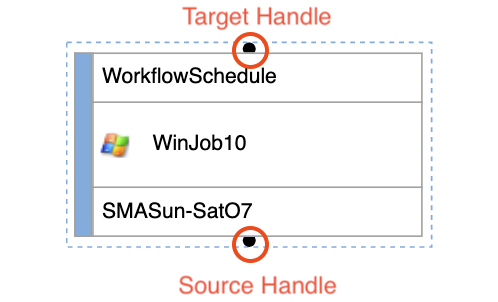
Job Nodes
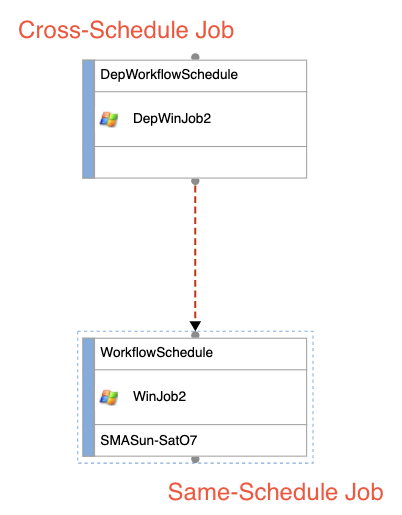
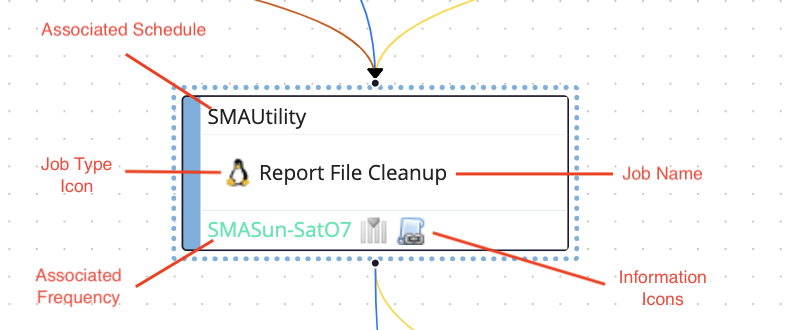
Job nodes represent a Master Job. Jobs associated with the selected schedule (not Cross-Schedule Jobs) have a blue dotted border. Jobs from a separate schedule have no dotted border and are displayed with a transparency effect.
Threshold Nodes

Resource Nodes

Expression Nodes
Edges
Edges represent dependencies: job dependencies, threshold dependencies and updates, resource dependencies and updates, and expression dependencies. Edge color and style (dotted vs. solid) indicate the dependency type:
Job Dependencies:
required: solid light green
requiredOnFailure solid red
requiredIgnoreEC: solid black
after: dotted light green
afterOnFailure: dotted red
afterIgnoreEC: dotted black
excludes: pink
conflict: dotted magenta
Threshold (Dependencies and Updates):
solid dark blue
Resource (Dependencies and Updates):
solid gold
Job Name Like Dependencies:
solid magenta
Expression Dependencies:
orange
Cross Schedule Dependencies
Dependencies can exist between jobs from different schedules, creating a cross-schedule dependency. These are represented like normal dependency lines; the nodes themselves indicate which job belongs to the selected schedule. See Job Nodes for details.
Dependency Disambiguator
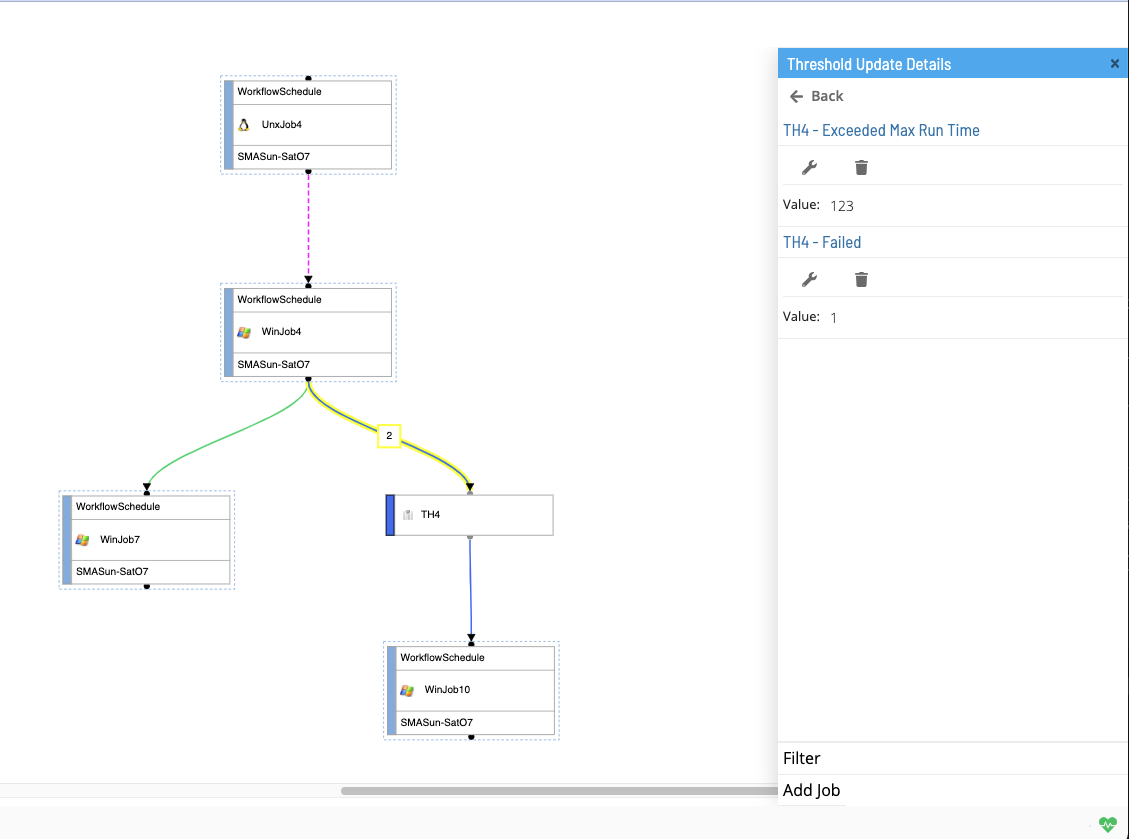
When multiple dependencies exist between two nodes (e.g., threshold and resource updates), the edge displays a numerical indicator showing the total number of dependencies. Selecting that edge opens the right panel with a list of those dependencies for individual selection. See Selecting an Edge with disambiguator for details.
Right Panel
The right panel (action container) is a context-sensitive drawer that changes based on the current canvas selection. From here you can add, edit, and delete jobs and dependencies, view node and dependency details, filter, search, and more.
Default Selection (null)
When nothing is selected in the canvas, the default right panel opens.
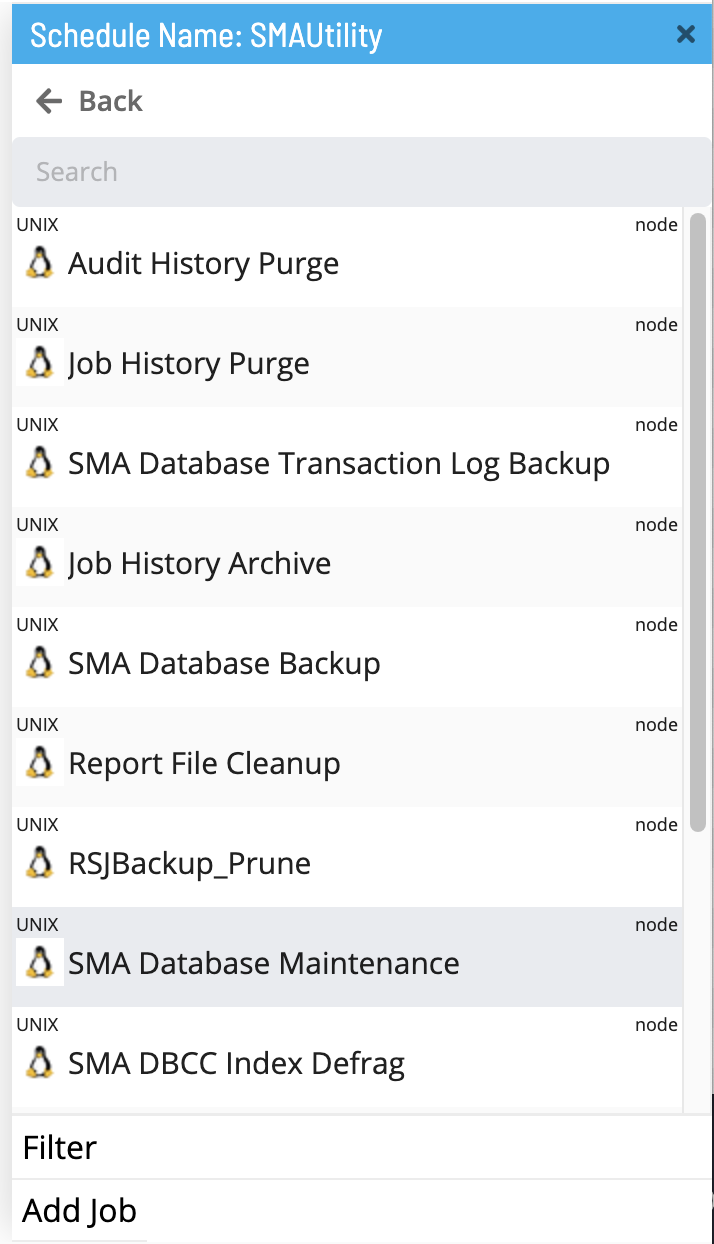
Available actions:
- Select the Back button to return to the studio schedule list
- Search the canvas. See Search for details
- Select a node from the list
- Filter the canvas. See Filter for details
- Select the Add Job button to Go to
/library/masterjobs/to add a new master job
Selecting a Node
Left-clicking a node selects it. The right panel updates to show details for the selected node.
Selecting a Job Node:
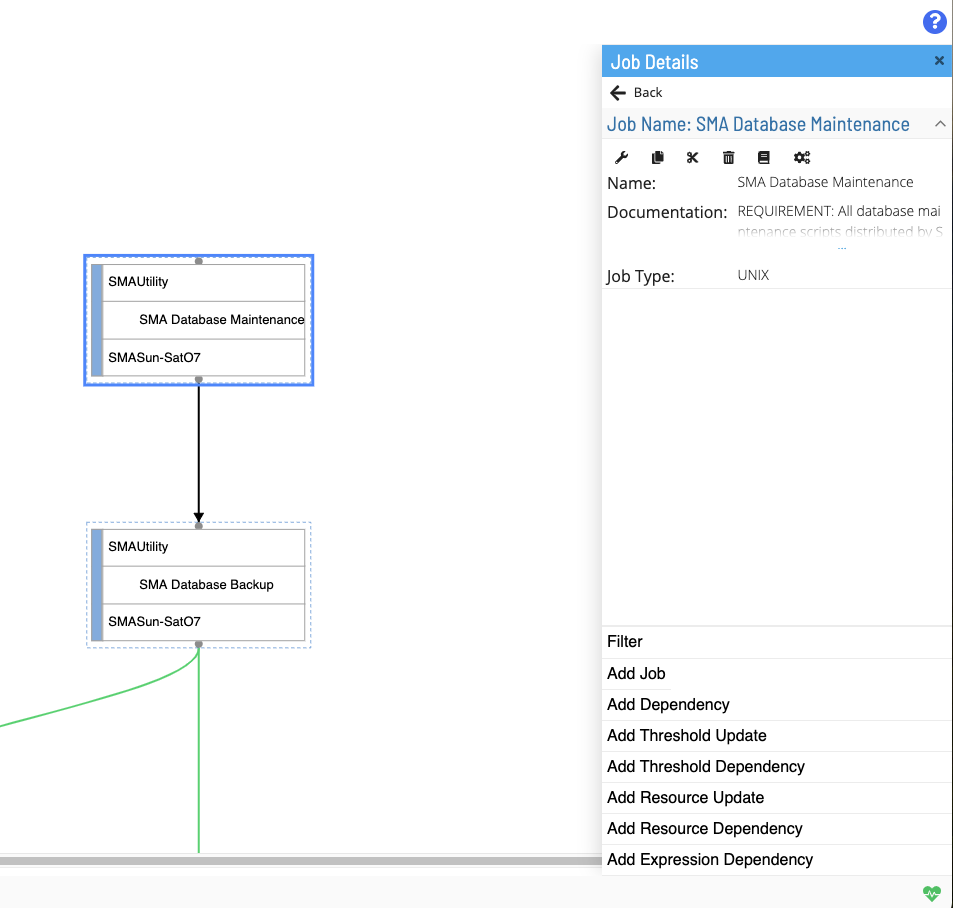
When a job node is selected, the right panel provides the following actions.
In the upper header container:
- Select Back to return to the default right panel view
- Edit, copy, move, or delete the selected Master Job
- Check cross references on the selected Master Job
- Reset the selected Master Job type to the default null job type
In the lower footer container:
- Filter the canvas. See Filter for details
- Select Add Job to Go to
/library/masterjobs/to add a new master job - Select Add Dependency to add a new Job Dependency. See Job Dependencies
- Select Add Threshold Update to add a new Threshold Update Dependency. See Threshold Updates
- Select Add Threshold Dependency to add a new Threshold Dependency. See Threshold Dependencies
- Select Add Resource Update to add a new Resource Update. See Resource Updates
- Select Add Resource Dependency to add a new Resource Dependency. See Resource Dependencies
- Select Add Expression Dependency to add a new Expression Dependency. See Expression Dependencies
Selecting a Threshold/Resource Node:
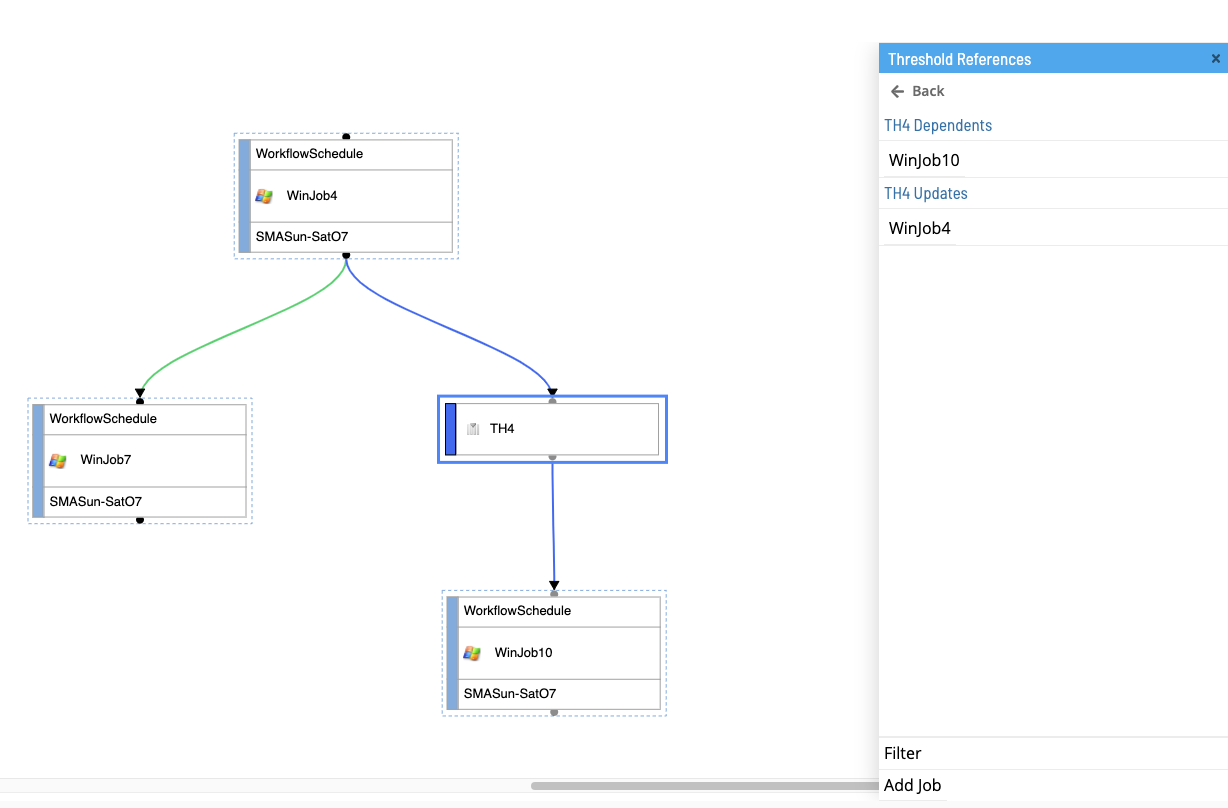
Selecting a threshold or resource node updates the right panel to list all jobs with threshold/resource connections (dependencies or updates), since a threshold or resource can be designated as either.
Selecting an Expression Node:
Selecting an expression node updates the right panel. Expression dependencies are unique to specific master jobs, so expression nodes are unique to their corresponding job nodes in the canvas.
Selecting an Edge
Left-clicking an edge selects it. The right panel updates to show details for the selected edge.
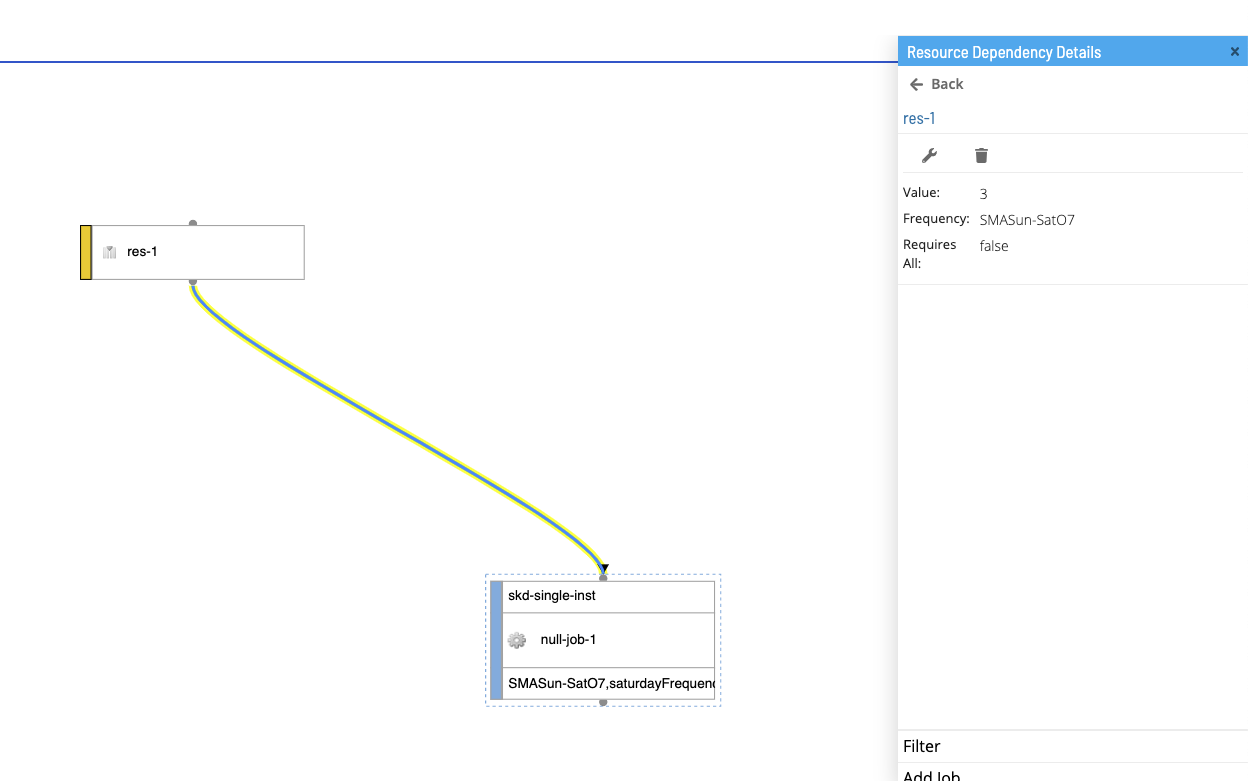
Selecting an Edge with Disambiguator
Selecting an edge with a numerical indicator opens the right panel with a list of associated dependencies. Select a specific dependency from the list to load its details in the right panel.
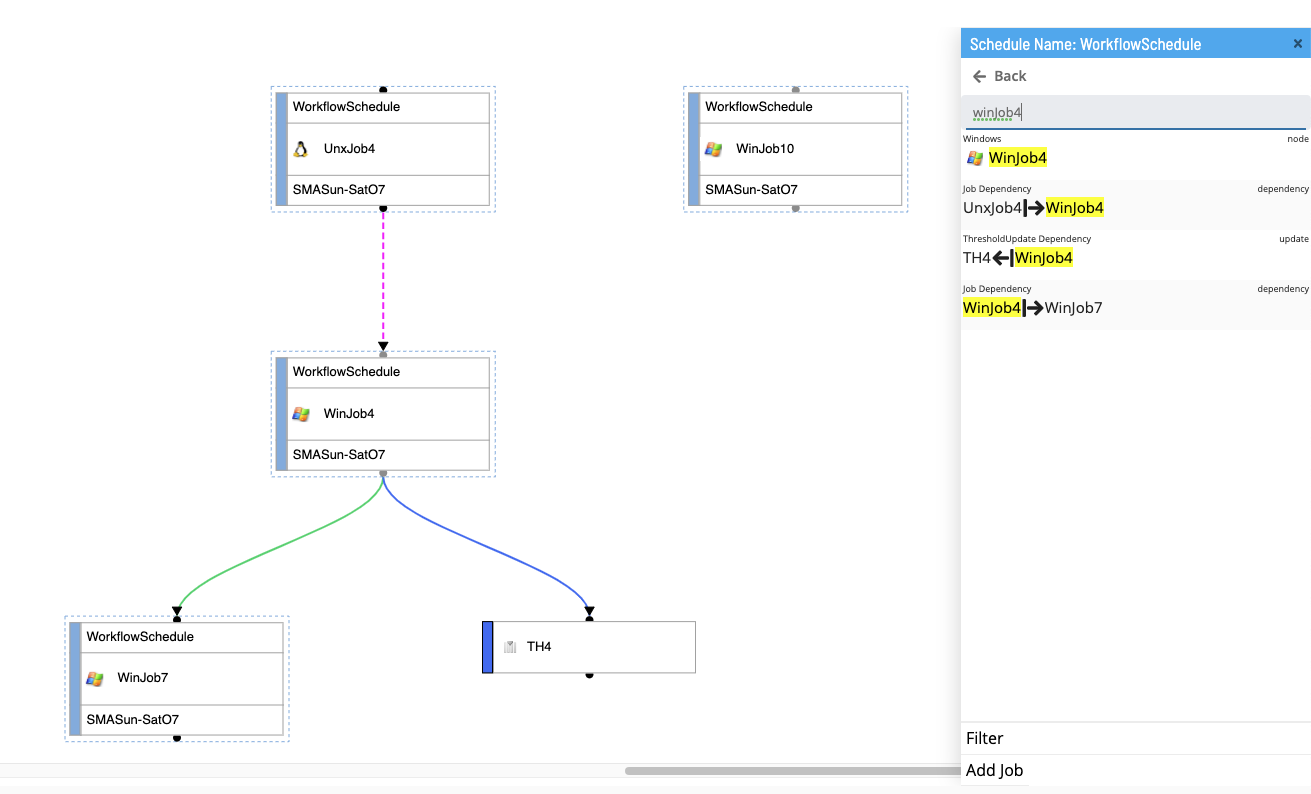
Search
The search feature is a text input field that locates specific nodes or edges on the canvas. Results appear in the right panel. Selecting a result centers the canvas on the selection and actively selects it.
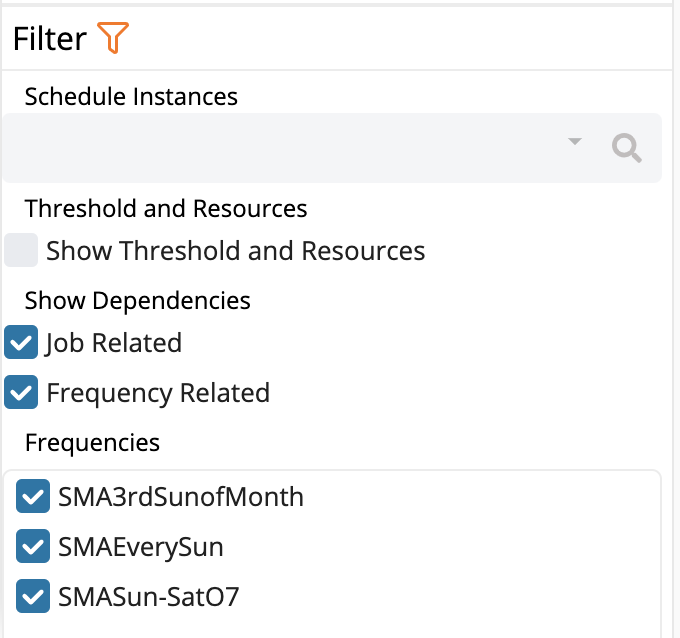
Filter
The filter feature narrows rendered nodes, edges, and search results. Filter by schedule instances, threshold and resources, job-related dependencies, frequency-related dependencies, or specific frequencies. By default, all nodes and dependencies are displayed with no active filters.
Subschedules
Container jobs can represent subschedules as nodes in the canvas. If the selected schedule is itself a subschedule, relevant parent schedule information appears in the bottom bar.
Breadcrumbs
If the selected schedule is a subschedule, the bottom bar renders a breadcrumbs component in the lower-left corner showing:
- All parent schedules that reference the selected schedule
- The selected schedule (shown as a subschedule of each listed parent)

Selecting a Parent Schedule
Parent schedules in the breadcrumbs are selectable (the selected schedule itself is not). Selecting a parent schedule redirects to that schedule's view. By default, only one parent schedule is shown; if there are more, a collapsed list with an ellipsis (...) appears, which expands when selected.

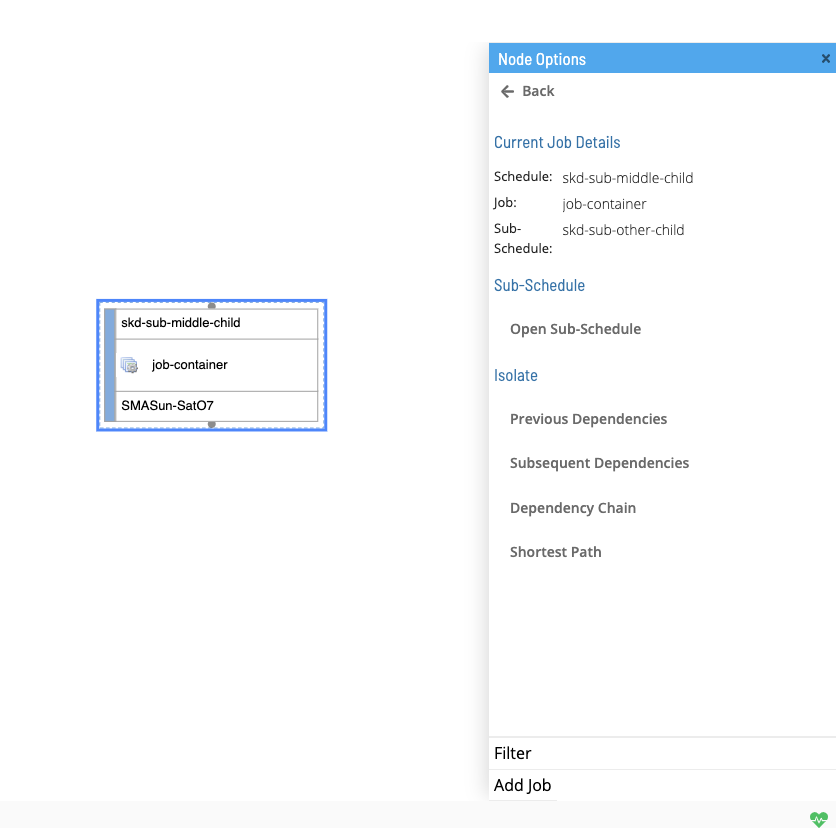
Selecting a Subschedule from a Container Job
right-clicking a container job in the canvas opens the right panel with its contained subschedule. Selecting the subschedule redirects to that subschedule's view.
Controls
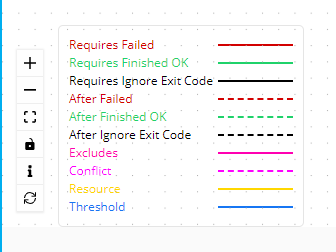
The controls are in the lower-left corner of the canvas. Use them to zoom in, zoom out, center to the root node, fit to screen, or download the canvas image.

Legend
Select the info button in the controls to open or close the legend, which shows details for each dependency line. The legend appears in the lower-left corner next to the controls.

Mini-Map
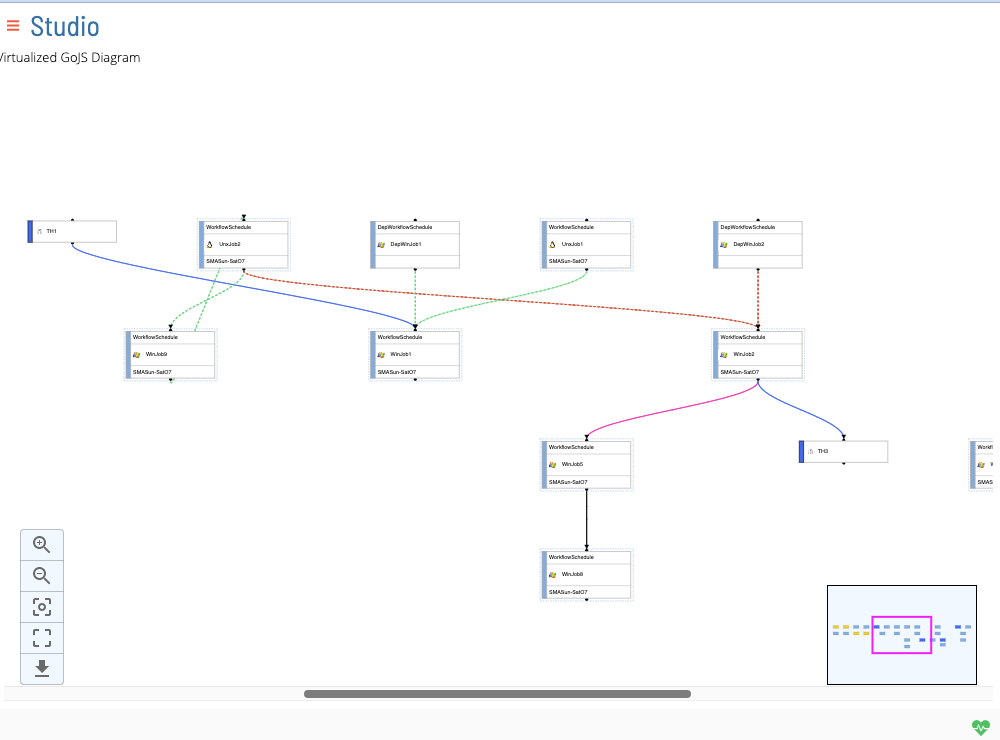
The minimap is in the lower-right corner of the canvas. Use it to view and move the current viewport.
FAQs
Q: How many steps does the Viewing Master Schedule procedure involve?
The Viewing Master Schedule procedure involves 2 steps. Complete all steps in order and save your changes.
Q: What does Viewing Master Schedule cover?
This page covers Studio Concepts.
Glossary
Solution Manager: OpCon's browser-based graphical user interface for managing automation data, performing operational actions, and administering the system.
Subschedule: A schedule that runs as a child process within a Container job, allowing hierarchical, nested workflow automation where a parent schedule can trigger and monitor an entire child schedule.
Container Job: A job type that runs a subschedule. Container jobs enable hierarchical schedule structures and support properties and events just like standard jobs.
Frequency: A set of rules that defines when a job or schedule is eligible to run, based on calendar rules, day-of-week settings, period offsets, and other timing criteria.
Threshold: A numeric variable stored in the OpCon database used to control job execution. Jobs can be made dependent on threshold values, and OpCon events can update threshold values at runtime.
Resource: A numeric variable in OpCon representing a finite pool. Jobs can be configured to require a set number of resource units to run, limiting concurrent executions and preventing resource contention.
Schedule: A named container for jobs in OpCon, built for a specific date to create that day's automation. Schedules define build settings, frequencies, and the jobs that run within them.
Job: The fundamental unit of work in OpCon. A job defines what to run, on which machine, when to start, and what conditions must be met. Job results are tracked and can trigger events and notifications.