Configuring Application Settings
Theme: Configure
Who Is It For? System Administrator, Automation Engineer
What Is It?
Use this procedure to configure Application Settings in Solution Manager.
The Application Settings tab is available only to users in the ocadm role.
To configure application settings, complete the following steps:
-
Log into the Solution Manager
-
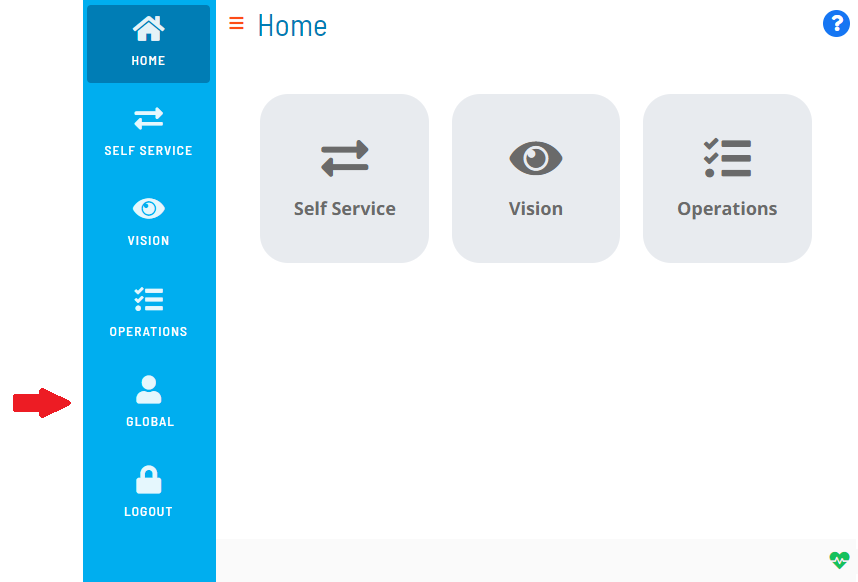
Select the user profile button in the Navigation menu
-
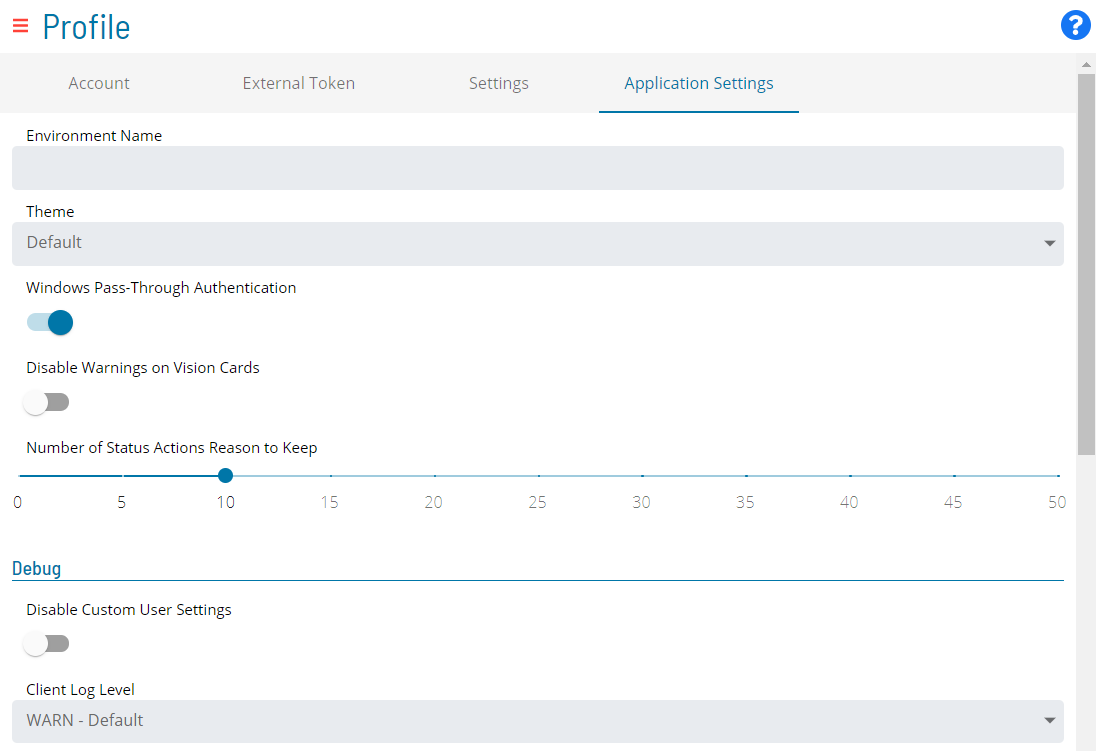
Select the Application Settings tab on the Profile page
-
Configure any of the following settings:
-
Select Save to save changes to the database
Environment Names
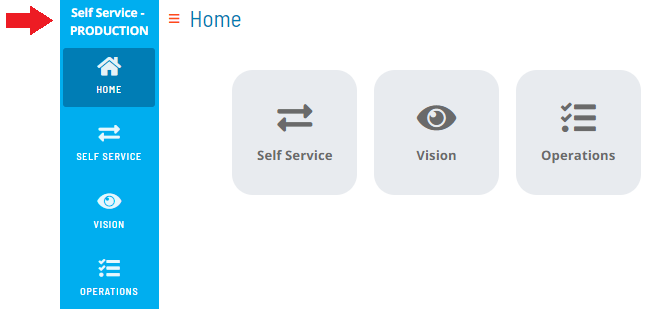
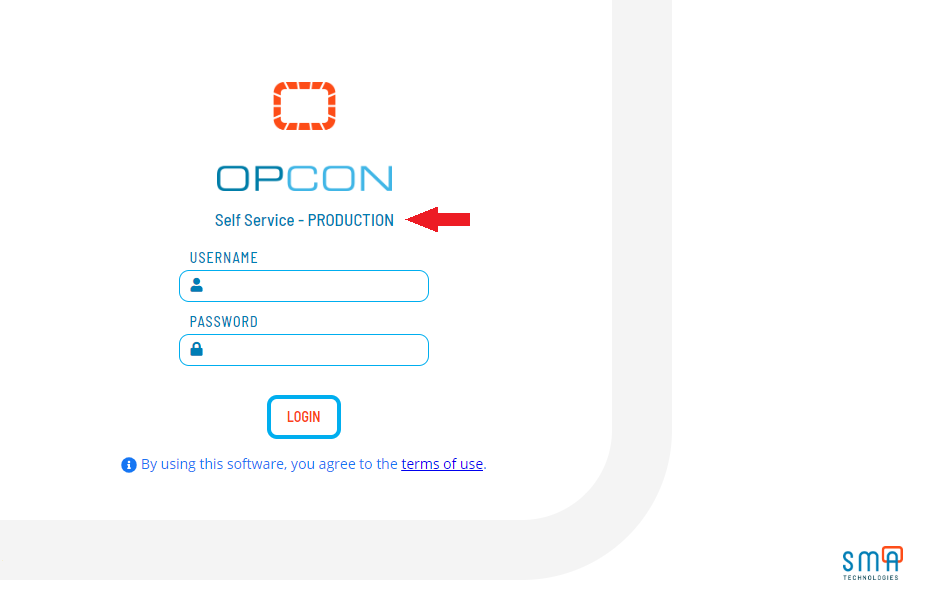
Environment names label your OpCon environments for easy identification. Once defined, the name appears at the top of the Navigation menu and on the login screen.
Windows Pass-Through Authentication
This switch enables or disables Windows Authentication.
Vision Card Warnings
Controls whether a Vision card enters a Warning state when jobs are in the Cancelled, Skipped, or Missed Start Time status. If disabled, those jobs are treated as finished without error or warning.
Status Actions Reason Caching
Sets the number of Status Reasons cached in the Change Status Reason list for Job or Schedule status updates. For example, setting this to 10 stores the last 10 reasons entered.
Debug
Configures global debugging for the application.
- Disable Custom User Settings: Controls whether users can define custom debug settings. If disabled, debug options are hidden from users
- Customer Log Level: Writes logs to the web browser console. Logs are local and lost when the browser closes
- Deep Observe: Enables a Framework event observe
- Send Trigger: Sets the trigger for sending server logs to the API server. Options:
- Disabled: Disables the trigger
- Send on Interval and Max Size: Interval- or size-driven trigger with these settings:
- Log Level: Sets the server log level
- Api: When enabled, logs all communications between the Customer and Server
- Interval (s): Sends logs at a set time interval (0–600 seconds)
- Max Size (characters): Sends logs when the accumulated size limit is reached (0–5000 kilobytes)
- Send on Event: Event-driven trigger with these settings:
- Log Level: Sets the server log level
- Api: When enabled, logs all communications between the Customer and Server
- Trigger Log Level: Sends logs when an ERROR or WARN occurs
- Max Size to keep (characters): Sends logs when the max size to keep limit is reached (0–5000 kilobytes)
To generate a temporary log file for the Support team when you can reproduce an issue, use the InstantLog Mode feature. Refer to InstantLog Mode for details.
Configuration Options
| Setting | What It Does | Default | Notes |
|---|---|---|---|
| Disable Custom User Settings | Controls whether users can define custom debug settings. | — | — |
| Customer Log Level | Writes logs to the web browser console. | — | — |
| Deep Observe | Enables a Framework event observe | — | — |
| Send Trigger | Sets the trigger for sending server logs to the API server. | — | — |
FAQs
Q: What does configuring application settings control?
Configuring application settings defines the settings that determine how OpCon behaves for this feature. Review the available options and set values appropriate for your environment.
Q: How many steps are required to configure application settings?
The configuration procedure involves 5 steps. Complete all steps in order and select Save to apply the changes.
Glossary
Solution Manager: OpCon's browser-based graphical user interface for managing automation data, performing operational actions, and administering the system.
Resource: A numeric variable in OpCon representing a finite pool. Jobs can be configured to require a set number of resource units to run, limiting concurrent executions and preventing resource contention.
Role: A named security profile in OpCon that groups privileges together. Roles are assigned to user accounts to control which features, schedules, jobs, machines, and administrative functions a user can access.
Schedule: A named container for jobs in OpCon, built for a specific date to create that day's automation. Schedules define build settings, frequencies, and the jobs that run within them.
Job: The fundamental unit of work in OpCon. A job defines what to run, on which machine, when to start, and what conditions must be met. Job results are tracked and can trigger events and notifications.
OpCon: Continuous' workflow automation platform. The OpCon server includes the database, SAM and Supporting Services (SAM-SS), and graphical user interfaces. agents installed on target platforms run jobs and report results.