Managing Escalation Groups
Theme: Configure
Who Is It For? System Administrator, Automation Engineer
What Is It?
Use Escalation Manager to add, edit, delete, and check cross-references for escalation groups.
Creating Escalation Group
Select the Add button above the list and fill out the Escalation Group form.
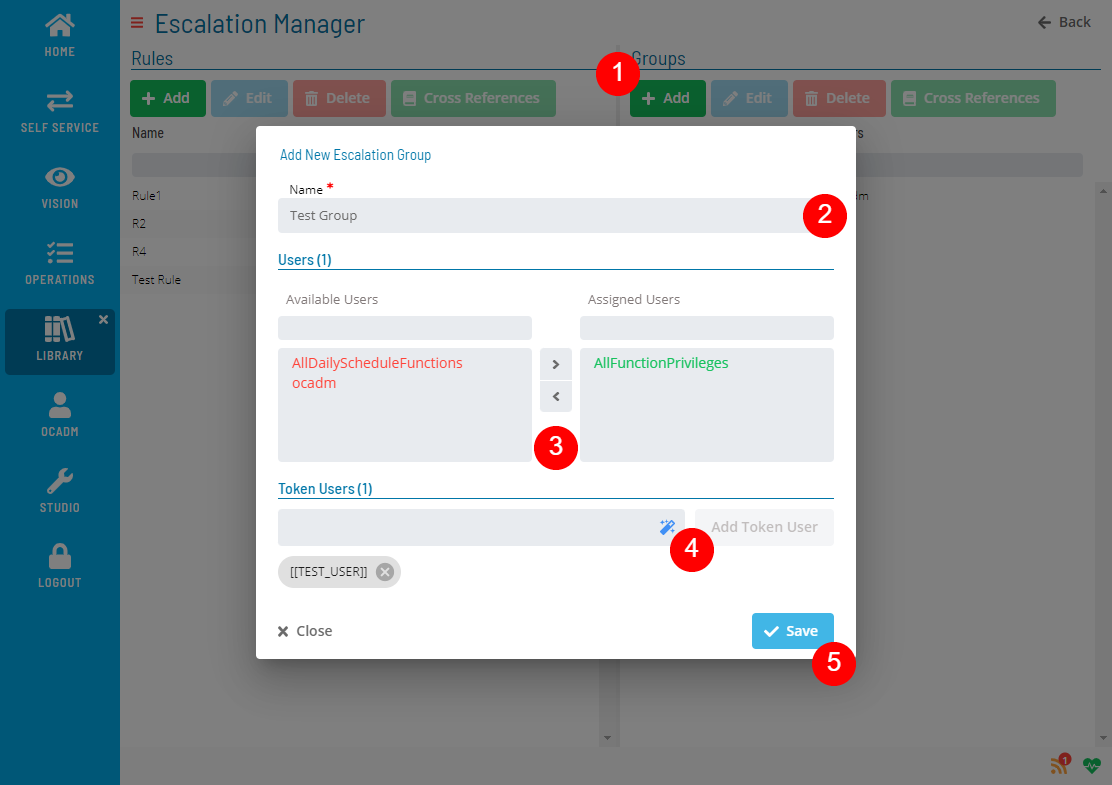
Escalation group must have at least one user or token user.
Editing Escalation Group
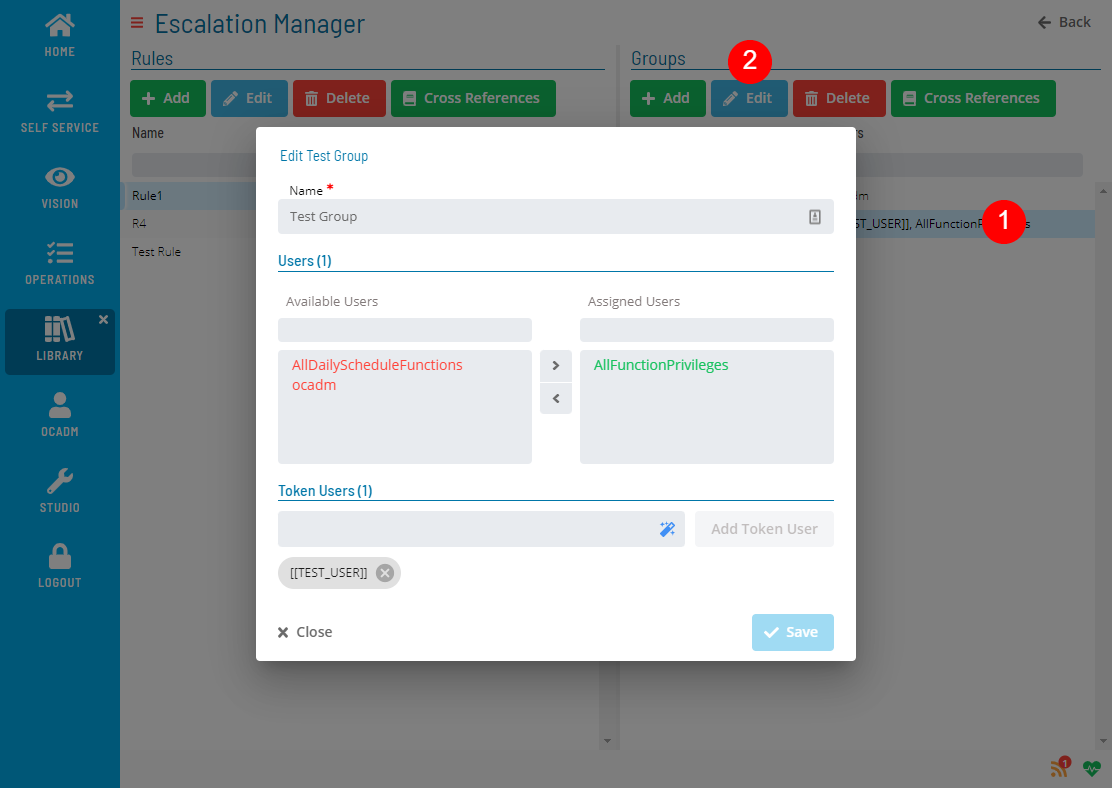
Select an Escalation Group, select the Edit button above the list, and fill out the Escalation Group form.
Deleting Escalation Group
Select an Escalation Group and select the Delete button above the list.
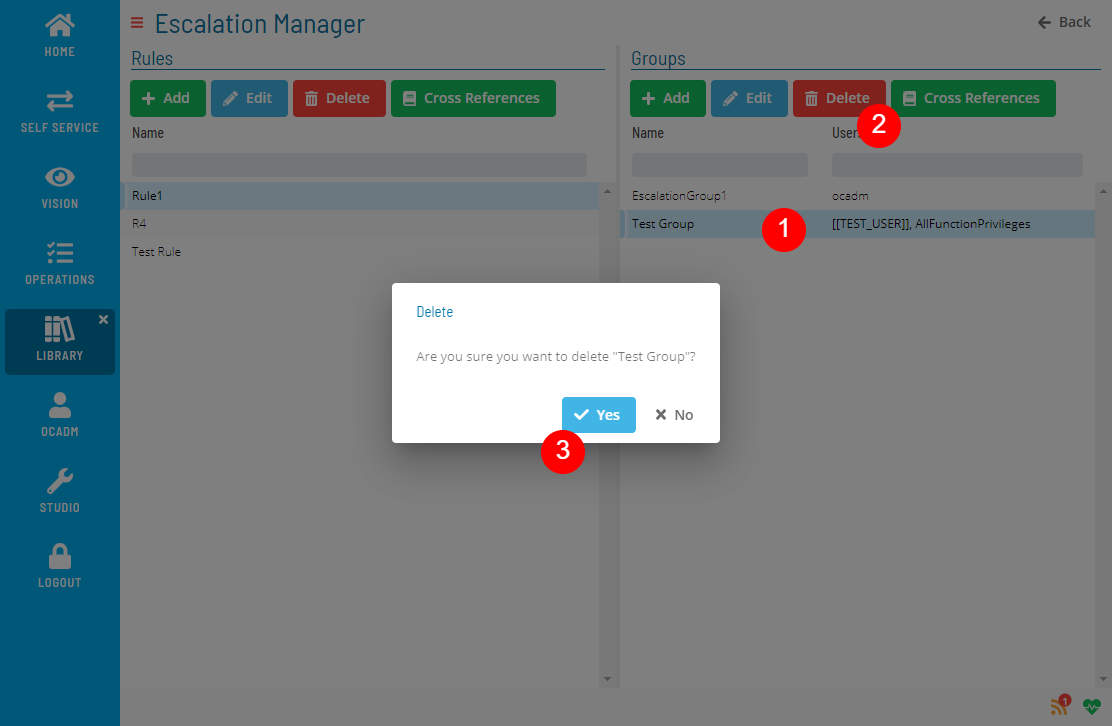
Delete is not allowed if the Escalation Group has any cross-references.
Checking Cross References
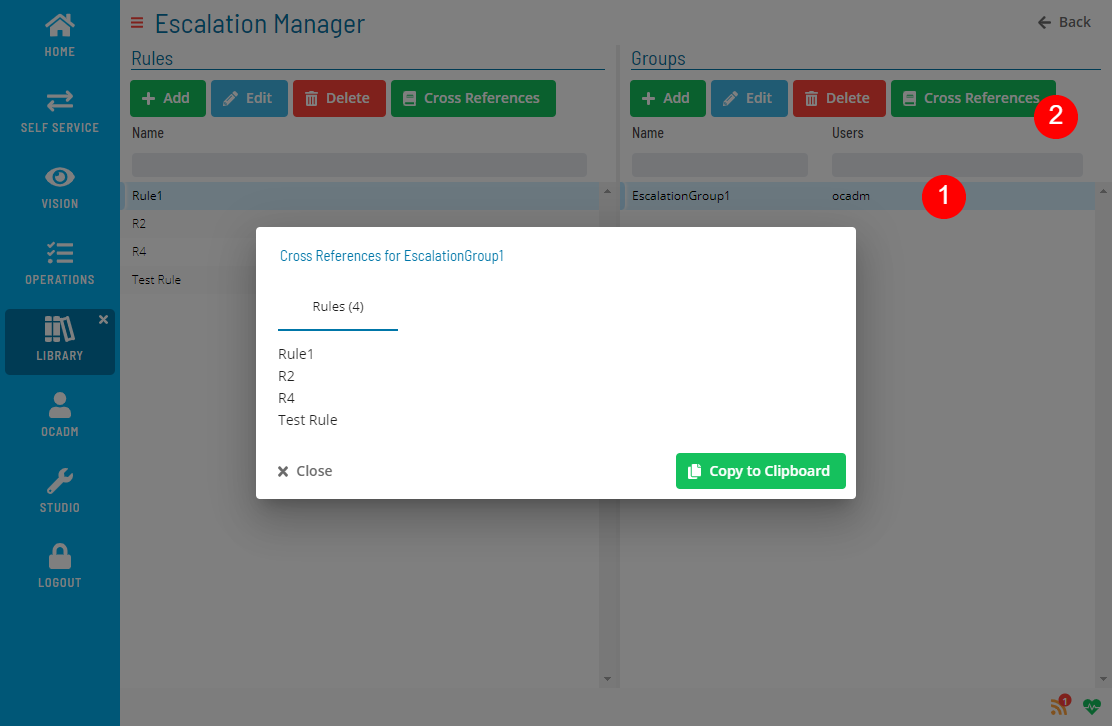
Select an Escalation Group and select the Cross References button above the list.
 Related Topics
FAQs
Q: What does managing escalation groups involve?
Managing escalation groups includes adding, editing, and deleting records. Access escalation groups through the Enterprise Manager navigation pane.
Q: Who can manage escalation groups in OpCon?
Users with the appropriate privileges assigned through their role can manage escalation groups. Contact your OpCon system administrator if you do not have access.
Glossary
Enterprise Manager (EM): OpCon's rich client graphical user interface for Windows and Linux, used to define schedules and jobs, manage automation data, and perform operational tasks.
Token (Global Property): A named value stored in the OpCon database, referenced in job definitions and events using [[PropertyName]] syntax. Tokens pass dynamic values — such as dates, file paths, or counts — into automation workflows.
Resource: A numeric variable in OpCon representing a finite pool. Jobs can be configured to require a set number of resource units to run, limiting concurrent executions and preventing resource contention.
Role: A named security profile in OpCon that groups privileges together. Roles are assigned to user accounts to control which features, schedules, jobs, machines, and administrative functions a user can access.
Privilege: A specific permission granted through an OpCon role that controls access to a feature, function, or object type. Privileges are organized into categories such as Function Privileges, Machine Privileges, Schedule Privileges, and Access Codes.
OpCon: Continuous' workflow automation platform. The OpCon server includes the database, SAM and Supporting Services (SAM-SS), and graphical user interfaces. agents installed on target platforms run jobs and report results.