Viewing, Adding, and Editing SAP R/3 and CRM Job Details
SAP R/3 and CRM job details define how OpCon submits background jobs to an SAP R/3 or CRM system, including job name, step details, and interceptor settings. These details are configured in the Task Details panel of an SAP R/3 master job in Solution Manager.
To view, add, or edit SAP R/3 and CRM job details, you must have the required privileges as defined in Required Privileges.
Viewing SAP R/3 and CRM Job Details
To view SAP R/3 and CRM job details, complete the following steps:
- Go to Library > Master Jobs.
- Select an SAP R/3 and CRM job in the list.
- Select Edit.
- Expand the Task Details panel.
Adding SAP R/3 and CRM Job Details
To add SAP R/3 and CRM job details, complete the following steps:
- Create the job and general info as described in Adding a Job.
- Expand the Task Details panel. See SAP R/3 and CRM Job Details for field descriptions.
Editing SAP R/3 and CRM Job Details
To edit SAP R/3 and CRM job details, complete the following steps:
- Go to Library > Master Jobs.
- Select an SAP R/3 and CRM job.
- Select Edit.
- Select the lock button. The button appears gray and locked (
 ) when in Read-only mode and appears green and unlocked (
 ) when in Admin mode.
 - Expand the Task Details panel. See SAP R/3 and CRM Job Details for field descriptions.
SAP R/3 and CRM Job Details
All required fields are designated by a red asterisk.
In the SAP R/3 and CRM Definition frame:
- Job Name: Name of the job as defined in the SAP R/3 and SAP CRM system.
- Job Number: SAP R/3 and SAP CRM job number (Job ID) as defined in the SAP system.
- running Target: Name of the SAP Application Server on which the job processes.
- Start the SAP Job: Configures SAP start criteria:
- A.S.A.P: Starts the job as soon as a background processor is available.
- Start Immediately: Starts the job as soon as it qualifies to run in OpCon, without waiting for an available SAP background processor. If all background processors are in use, the job fails.
Select SAP Job
Select the search button next to Job Name to open the SAP Query dialog.

In the Query Job SAP dialog:
- Machine: SAP R/3 Agent machine name.
- Language: Two-character language abbreviation (for example,
ENfor English). - Job Name: Text matching the desired job name. Use wildcards (
*) for partial matches. Avoid using only wildcards — on systems with many jobs, this can cause the SAPQueryProcessor to become unresponsive. - User ID: Username for SAP credentials.
- Password: Password for SAP credentials.
Enter SAP credentials and select the search button to retrieve matching job names. Select a job from the list and select OK to assign it to the daily job.
In the Create SAP Job dialog:
- Job Name: Name of the job being created.
- Job Class: SAP job class A, B, or C.
- Spool Recipient: Spool recipient for the SAP job.
- Credentials Button: Opens the SAP Login dialog.
note
Enter credentials before creating an SAP job. Credentials apply to all SAP queries.
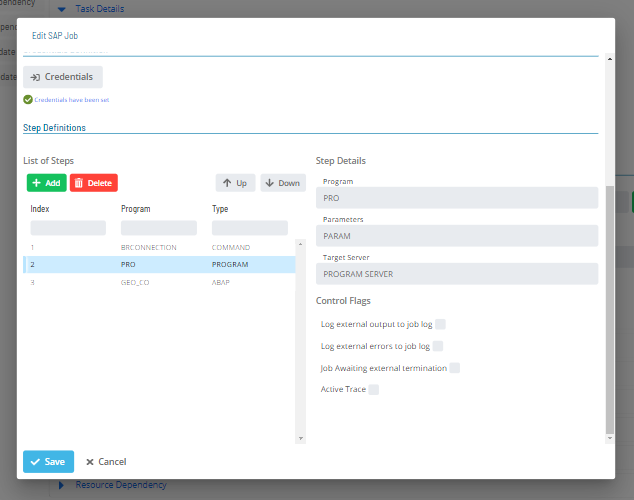
- List of Steps: Add, edit, and delete steps after entering credentials. Steps can be Abap Program, External Command, or External Program.
- Step Details: Details for the selected job step. Enter credentials and select an item from List of Steps to define details.
Enter Credentials
Select Credentials under Credentials Definition to open the SAP Login dialog.
In the SAP Login dialog:
- Machine: SAP R/3 Agent machine name.
- User ID: Username for SAP credentials.
- Password: Password for SAP credentials.
- Language: Two-character language abbreviation (for example,
ENfor English).
Edit SAP Job
Open the Edit SAP Job dialog by selecting the edit button.

Open the credentials dialog and enter credentials.
Credentials are required to enable the Query button.
In the SAP Login dialog:
- Machine: SAP R/3 Agent machine name.
- User ID: Username for SAP credentials.
- Password: Password for SAP credentials.
- Language: Two-character language abbreviation (for example,
ENfor English).
After entering credentials, select the query button to search for the job. When results appear, make any changes and select Save.
Delete SAP Job
Open the Delete SAP Job dialog by selecting the delete button.

- Machine: SAP R/3 Agent machine name.
- Language: Two-character language abbreviation (for example,
ENfor English). - User ID: Username for SAP credentials.
- Password: Password for SAP credentials.
Enter credentials and select Yes to delete the job.
Add Steps to SAP Job
Select the add button under List of Steps to open the Add SAP Step dialog.
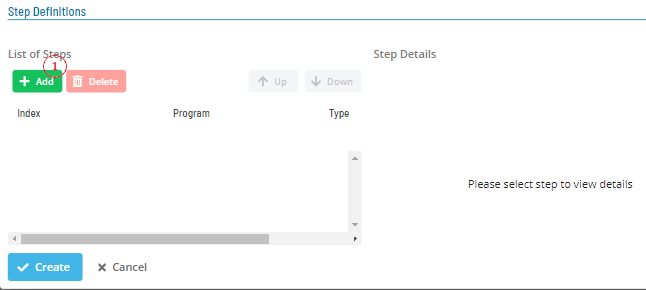
Add SAP Step Dialog
- Abap Program
- ABAP Program Selector: Text matching the desired ABAP program. Use wildcards (
*) for partial matches.
- Select the search button to retrieve matching ABAP programs from the SAP R/3 system.

- Select an Abap Program and select OK to add it to the SAP job step.
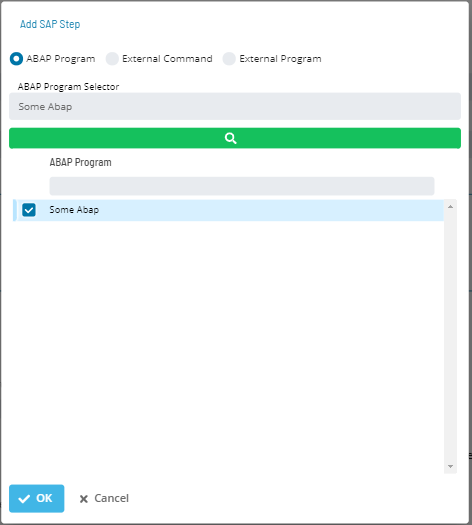

- ABAP Program Selector: Text matching the desired ABAP program. Use wildcards (
- External Command
- External Command Selector: Text matching the desired external command. Use wildcards (
*) for partial matches.
- Enter the command name or select the search button to retrieve matching external commands.
- Select an External Command and select OK to add it to the SAP job step.


- External Command Selector: Text matching the desired external command. Use wildcards (
- External Program
- External Program Name: Text matching the desired external program.

- Enter the External Program Name and select OK to add it to the SAP job step.

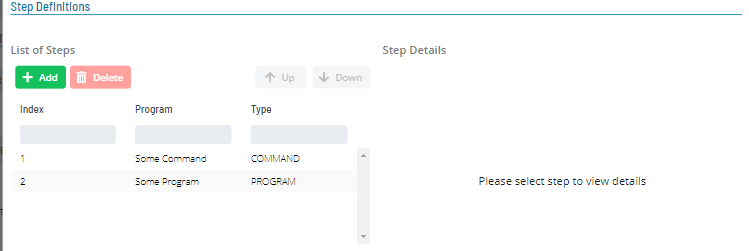
- External Program Name: Text matching the desired external program.
 Use the up and down buttons to reorder steps.
Abap Program Details
- Select Abap Program from the list of steps.
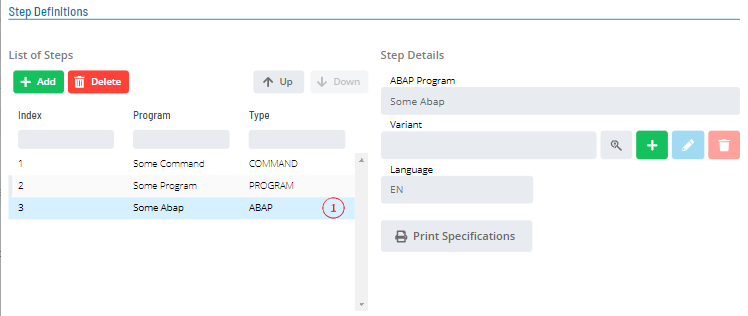
- ABAP Program: Name of the ABAP program.
- Variant: Variant for the ABAP program.
- Search Variant: Retrieves all variants for the selected ABAP step from the SAP R/3 system.

- Add Variant: Opens the add variant dialog to create a new variant.

- Edit Variant: Opens the edit variant dialog. Search and select a variant or create a new one to enable this button.

- Delete Variant: Removes the current variant from the selected ABAP step. Search and select a variant or create a new one to enable this button.

- Search Variant: Retrieves all variants for the selected ABAP step from the SAP R/3 system.
- Language: Two-character language abbreviation (for example,
ENfor English). - Print Specifications: Opens the Print Specifications dialog.

Abap Variants
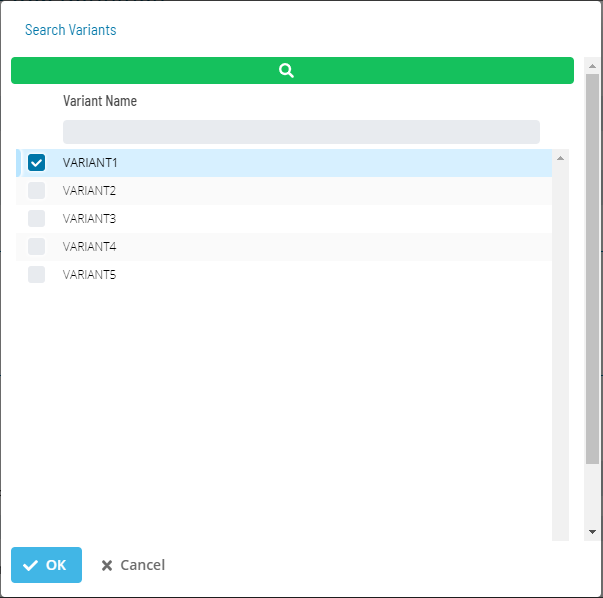
Search Variant Dialog
Select the search button to retrieve all variants for the selected ABAP step.
Select a Variant and select OK to apply it to the ABAP step.

Add Variant Dialog
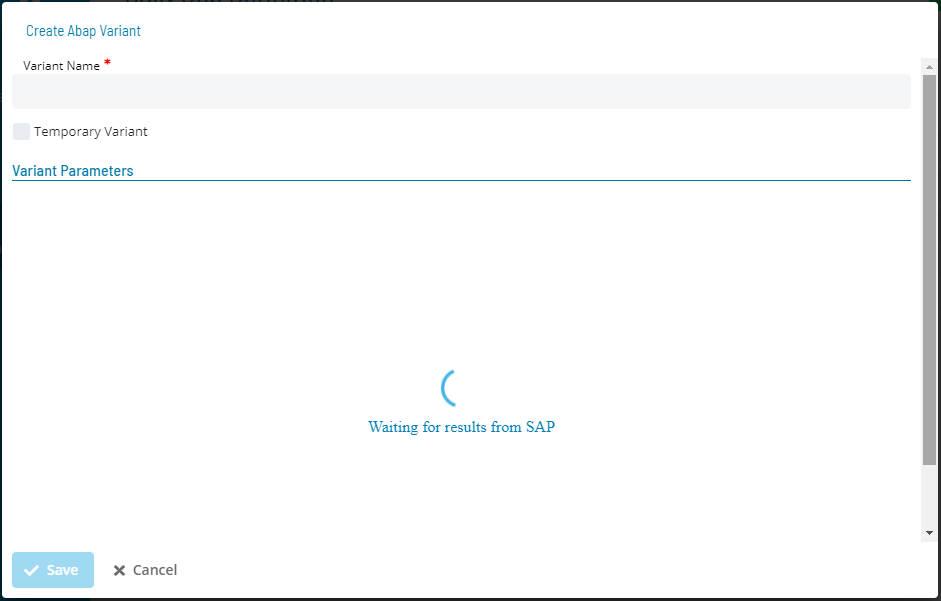
Select the add button to open the create variant dialog.
Wait for the SAP Business Warehouse system to return Variant Parameters.
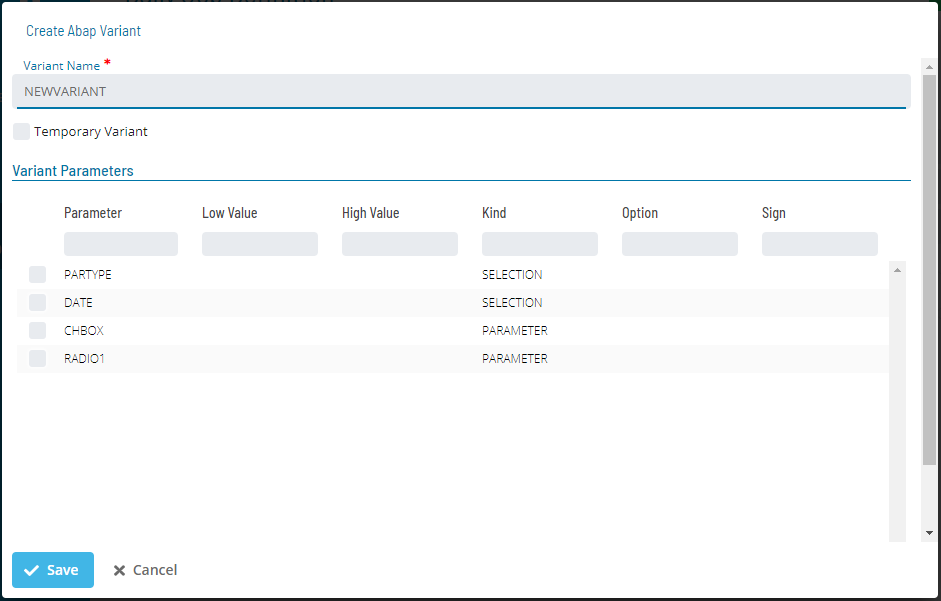
- Variant Name: Name for the variant being created.
- Temporary Variant: Creates the variant in the local database. The variant is created when the daily job is saved and deleted when the daily job or SAP job is deleted.
- Variant Parameters: Returned from the SAP Business Warehouse system when the create variant dialog opens.
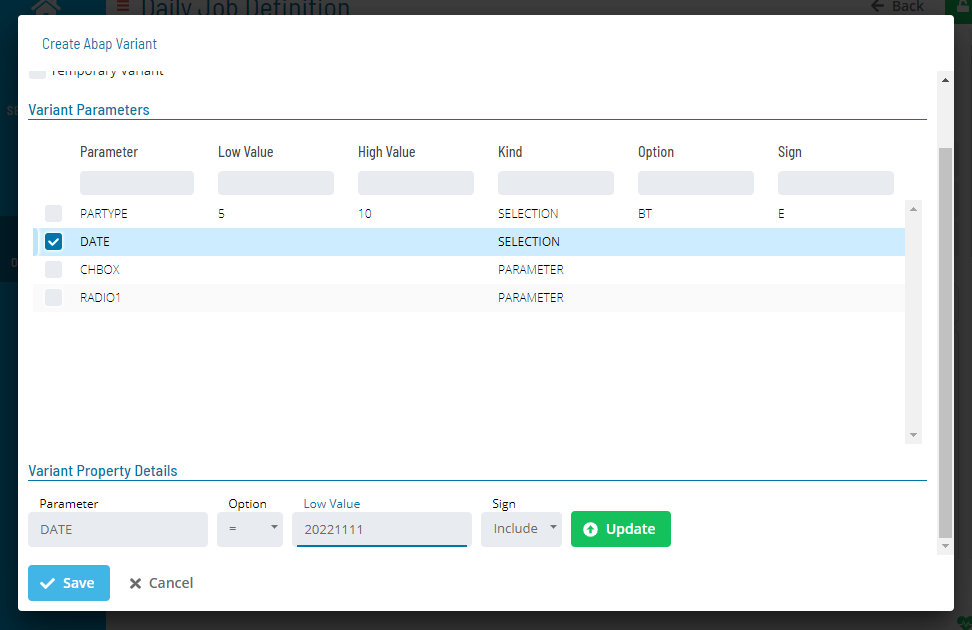
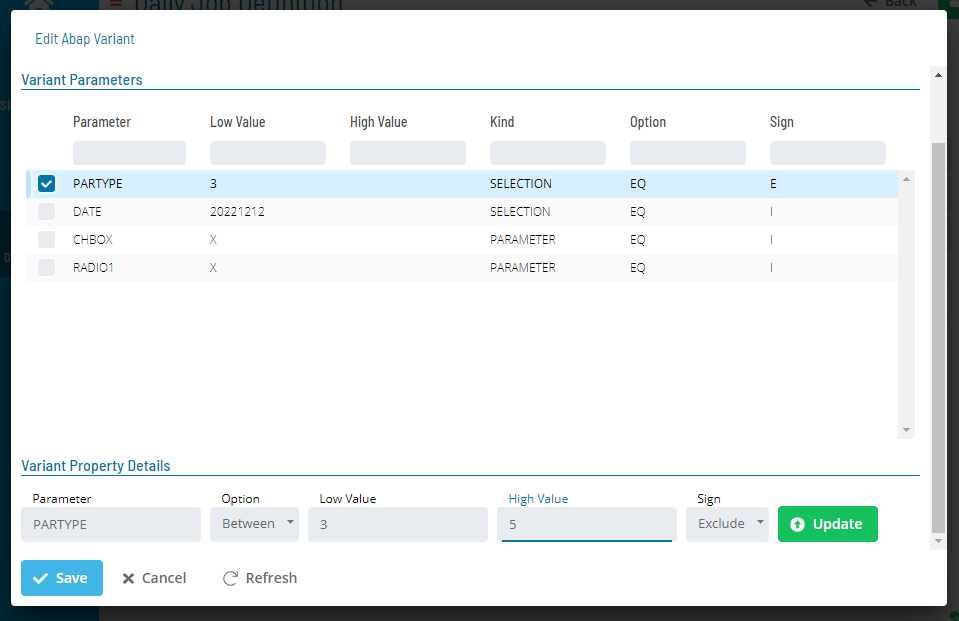
Select a variant parameter to update its values, then select the update button to apply.
Edit Variant Dialog
Select or create a variant to enable the edit button, then open the edit variant dialog.
Wait for Variant Parameters to be returned.
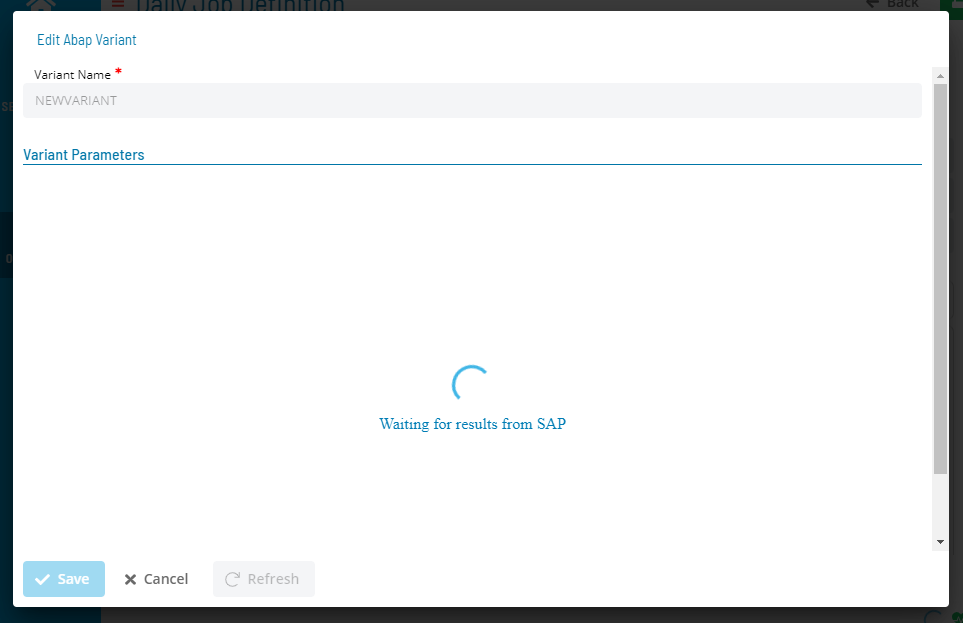
- Variant Name: Name of the variant being updated (read-only).
- Refresh: Sends a request to check and load new parameter values.
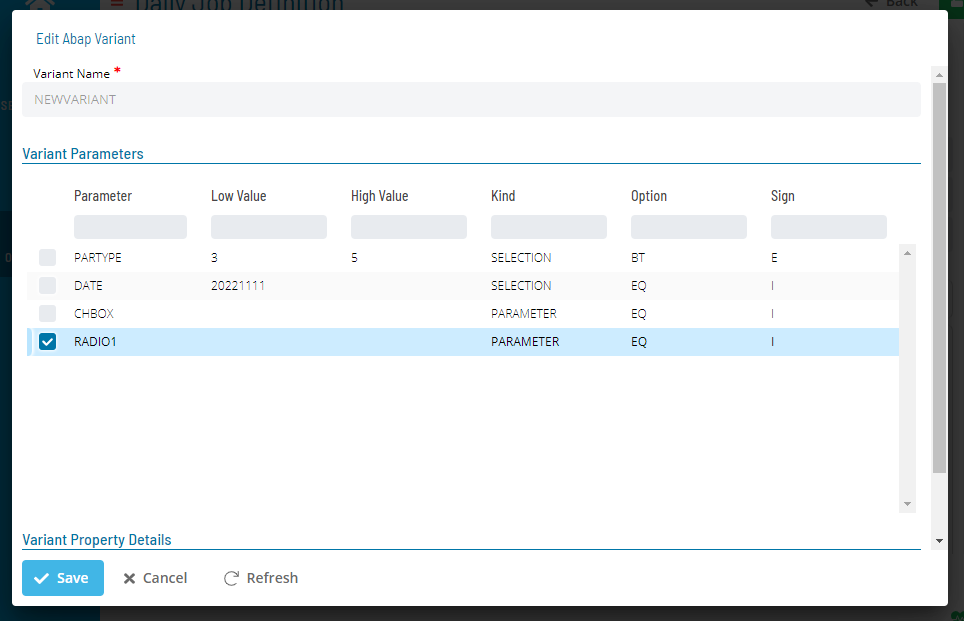
Select a variant parameter to update its values, then select the update button to apply.
Delete Variant Dialog
Select or create a variant to enable the delete button, then select it to remove the variant from the Abap Program.
This removes the variant from the ABAP step only. It does not permanently delete the variant from the SAP Business Warehouse system.
Abap Print Specifications
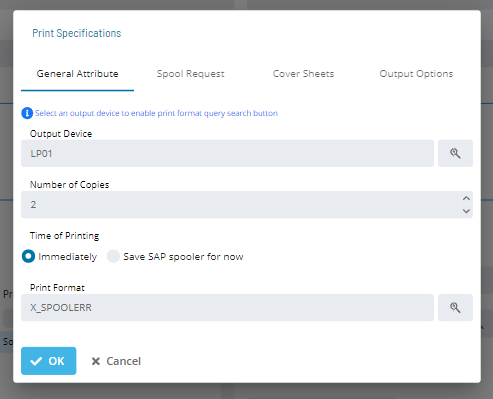
Select the Print Specifications button to open the dialog.
General Attribute Tab
- Output Device: Output device. Select the search button to query SAP for available devices.

- Number of Copies: Number of copies to print.
- Time of Printing: When to print.
- Print Format: Print format. Select the search button to query SAP for available formats. An output device must be selected first to enable the query button.

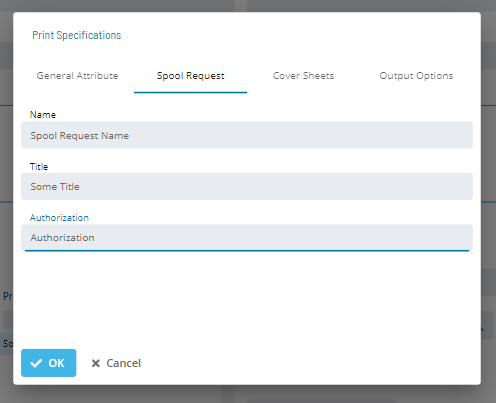
Spool Request Tab
- Name: Spool request name.
- Title: Spool request title.
- Authorization: Spool request authorization.
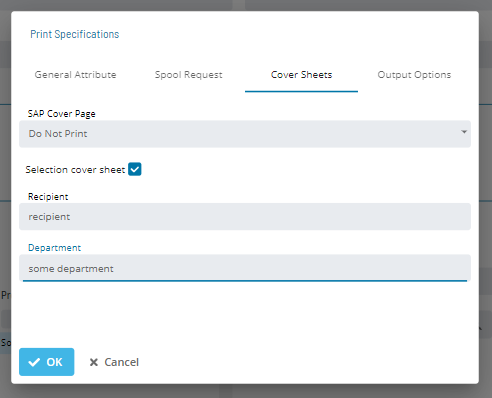
Cover Sheets Tab
- SAP Cover Page: Whether a cover page should be printed.
- Selection Cover Sheet: Selection cover sheet.
- Recipient: Recipient field.
- Department: Department field.
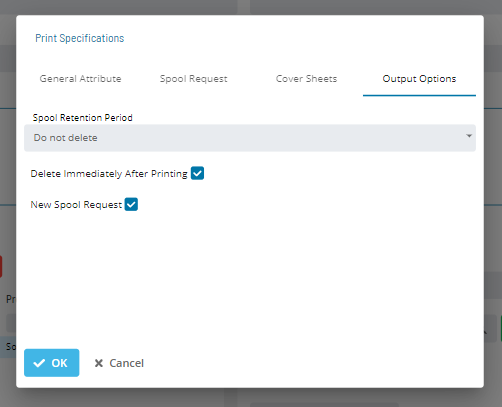
Output Options Tab
- Spool Retention Period: When to delete after printing.
- Delete Immediately After Printing: Deletes the spool immediately after printing.
- New Spool Request: Creates a new spool request.
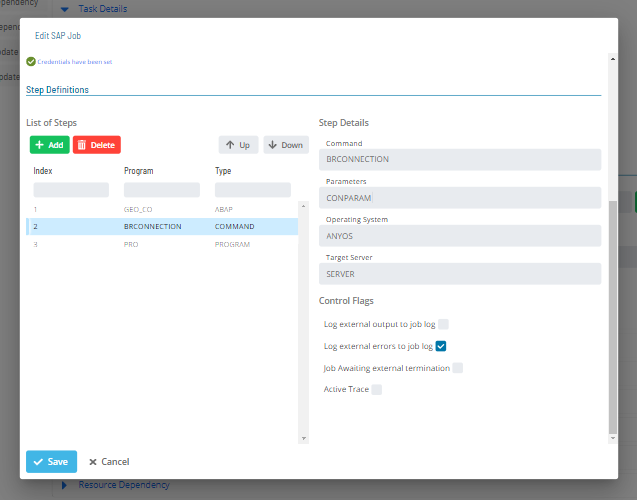
External Command Details
- Command: Name of the selected external command.
- Parameters: Parameters for the external command.
- Operating System: Operating system for the external command.
- Target Server: Target server for the external command.
- Log external output to job log: Logs external output to the job log.
- Log external errors to job log: Logs external errors to the job log.
- Job awaiting external termination: Waits for external termination.
- Active trace: Activates trace.
External Program Details
- Program: Name of the selected external program.
- Parameters: Parameters for the external program.
- Target Server: Target server for the external program.
- Log external output to job log: Logs external output to the job log.
- Log external errors to job log: Logs external errors to the job log.
- Job awaiting external termination: Waits for external termination.
- Active trace: Activates trace.
Select running Target
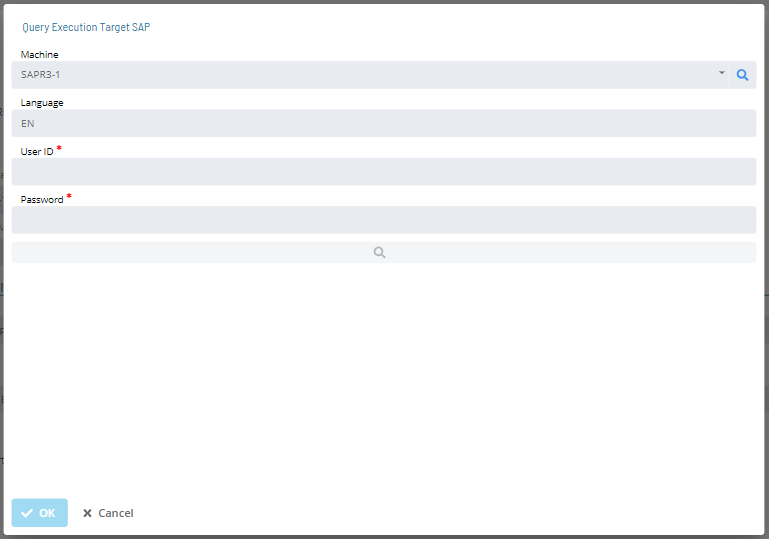
Select the search button next to running Target to open the SAP Query dialog.

In the SAP Query dialog:
- Machine: SAP R/3 Agent machine name.
- Language: Two-character language abbreviation (for example,
ENfor English). - User ID: Username for SAP credentials.
- Password: Password for SAP credentials.
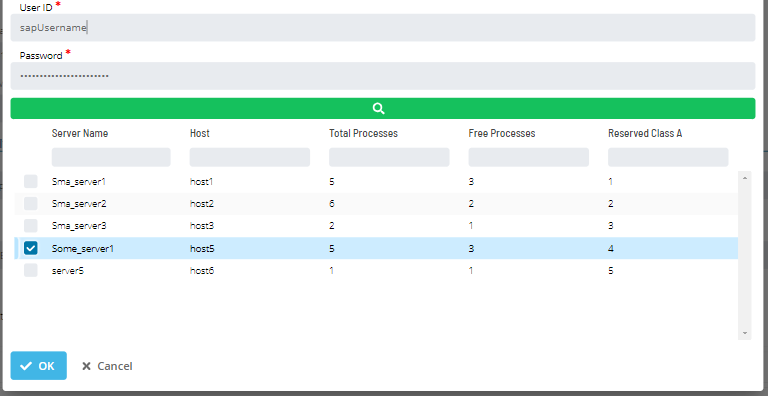
Enter SAP credentials and select the search button to retrieve all running targets.
Select a target from the list and select Ok to assign it to the running Target field.

Remove running Target
To remove the running Target, select the delete button.
More Information
For conceptual information, refer to SAP R/3 and CRM Jobs in the Concepts online help.