Schedule and Job History Report
Theme: Configure
Who Is It For? System Administrator, Automation Engineer
What Is It?
The Schedule and Job History Report displays schedule and job history information.
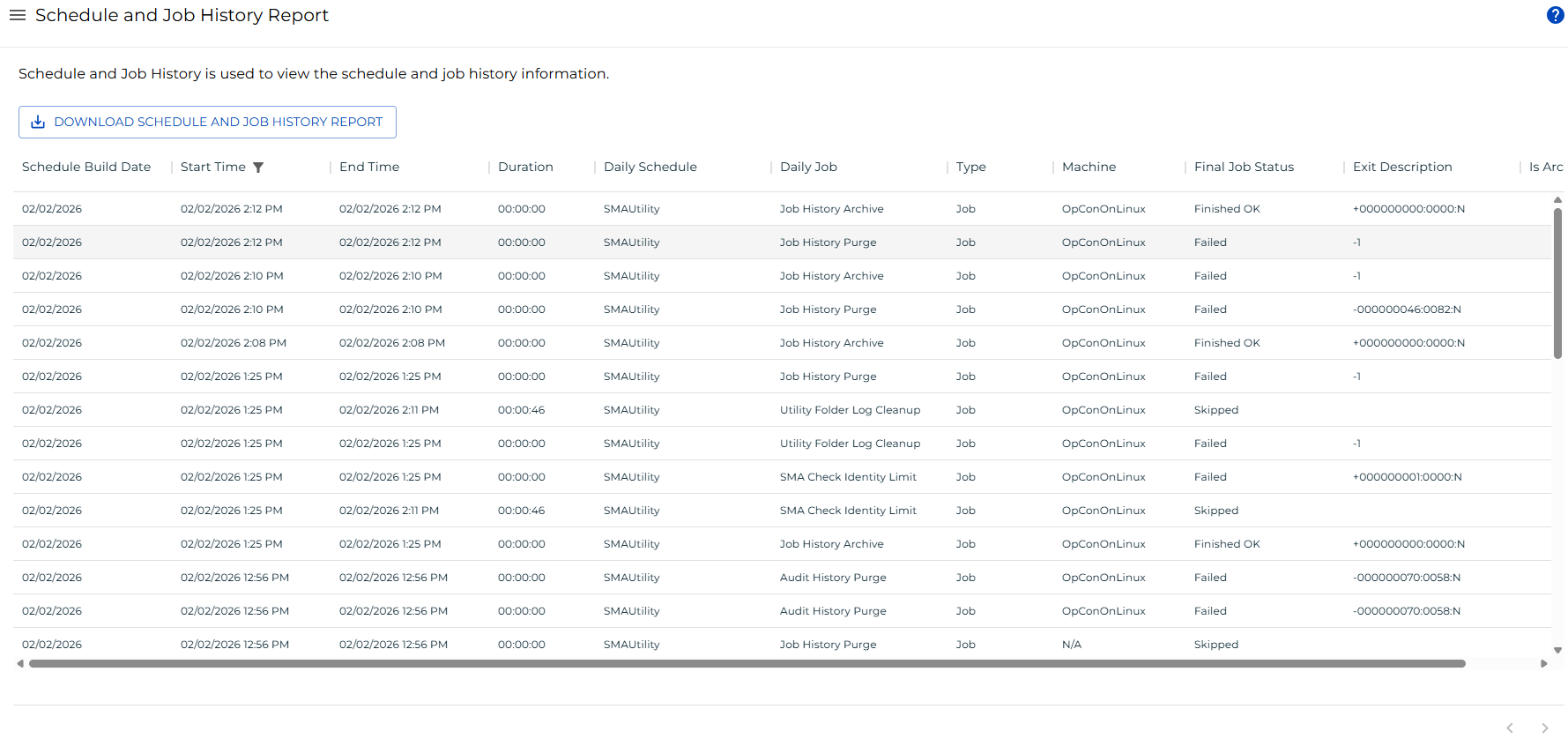
Filtering and Sorting
Two filters are applied by default: one limits start time to the current day, and the other pulls only non-archived records. You can adjust these or add filters to other columns using the filters panel. Open the filters panel by selecting the filter icon in the header, selecting any column with an active filter, or selecting the menu (three dots) in any column header and choosing Filter. Both default filters are required but can be adjusted.
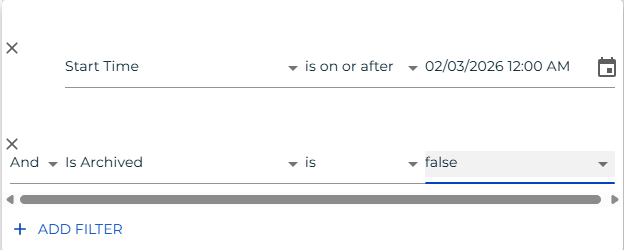
Filter Panel showing the default start time and is archived filters
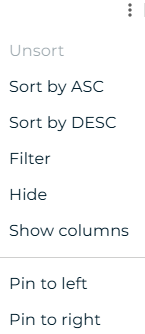
Column menu showing the Filter option
Exporting to CSV
Select the export  button to download the report as a CSV. Any active filters are applied to the export.
FAQs
Q: What does the Schedule and Job History Report display?
The Schedule and Job History Report displays schedule and job history information. By default, results are filtered to the current day and non-archived records only.
Q: Where can you find the Schedule and Job History Report in OpCon?
Go to Library > Reporting in Solution Manager and select Schedule and Job History Report from the REPORTS tab.
Glossary
Solution Manager: OpCon's browser-based graphical user interface for managing automation data, performing operational actions, and administering the system.
Schedule: A named container for jobs in OpCon, built for a specific date to create that day's automation. Schedules define build settings, frequencies, and the jobs that run within them.
Job: The fundamental unit of work in OpCon. A job defines what to run, on which machine, when to start, and what conditions must be met. Job results are tracked and can trigger events and notifications.
OpCon: Continuous' workflow automation platform. The OpCon server includes the database, SAM and Supporting Services (SAM-SS), and graphical user interfaces. Agents installed on target platforms run jobs and report results.